

As enterprises advance their digital commerce initiatives, the ability to manage product information underpins personalization and recommendation performance.
McKinsey reports that 71% of consumers expect personalized interactions, and 76% become frustrated when these experiences fall short.
This article explores how product information management (PIM) powers scalable personalization and data-driven recommendations within enterprise commerce strategies.
Product Information Management (PIM) is a strategic commerce capability that enables organizations to scale, differentiate, and personalize product experiences across digital channels.
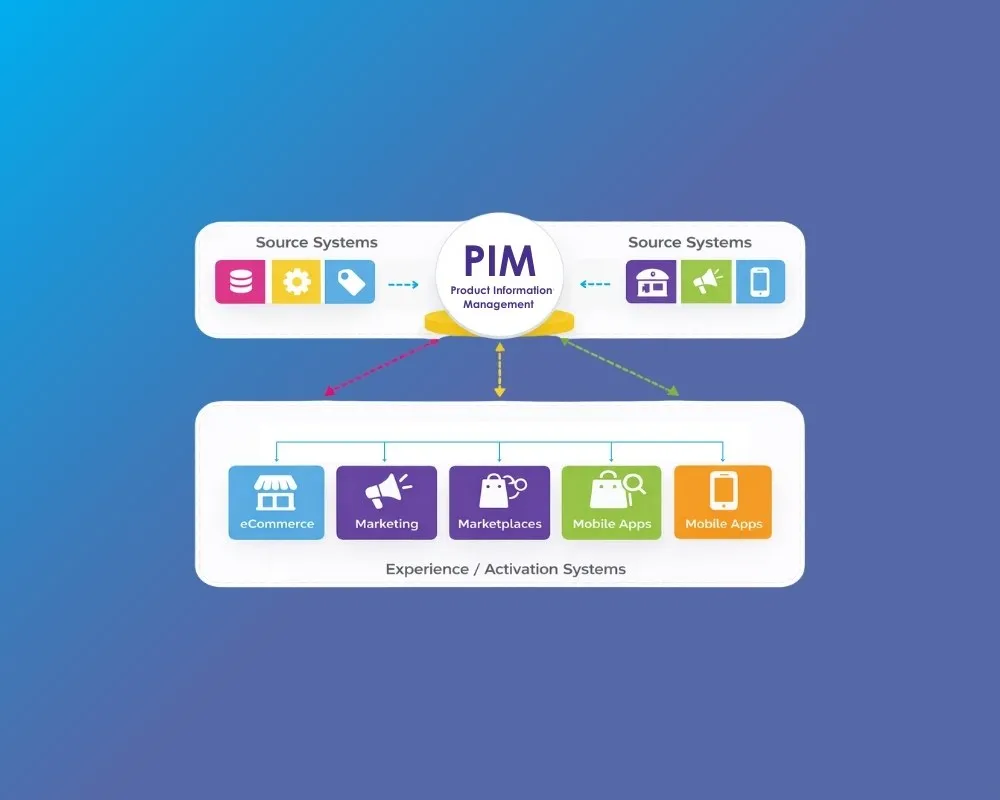
Product information management software centralizes, governs, and distributes product data from sources such as ERP systems, supplier feeds, and internal content repositories, transforming it into structured and experience-ready information.
It ensures that each offering is described accurately, including technical specifications, classifications, marketing content, imagery, and localized data. This establishes a unified product data foundation that enables teams to present, sell, and syndicate items across commerce, marketing, marketplace, and sales channels.
In B2B and D2C environments, PIM functions as a product data intelligence hub that enables commerce capabilities such as search, merchandising, personalization, and recommendations. PIM enables organizations to accelerate time-to-market and manage portfolios while delivering consistent, tailored product experiences at scale.
Product information management also streamlines product onboarding into commerce and marketing systems, allowing teams to adapt and manage product information across channels and regions without duplicating effort, so organizations can respond rapidly to market demands while maintaining accuracy and control.
As commerce ecosystems become increasingly interconnected and composable, product information management transforms product data into a strategic asset, connecting operational data with experience-driven platforms to enhance customer experiences and drive sustained digital growth.
Personalization is a baseline requirement for high-performing digital commerce organizations, influencing shopper behavior, conversion, business performance, and brand loyalty.
In ecommerce, personalization applies to customer and behavioral data to tailor experiences across channels, from product discovery and search to email and web content. These interactions strengthen buyer confidence, improve engagement, and support purchasing decisions.
Research by Bloomreach shows that personalized shopping experiences drive measurable results: brands report an average 20% increase in sales, approximately 80% of consumers are more likely to purchase, and nearly 60% are more likely to return after a personalized interaction.
These outcomes position personalization as a strategic lever for ecommerce growth. However, realizing this impact depends on optimizing the product data foundation that supports it.
Personalization at scale depends on accurate, structured product data. Although many organizations invest in AI, customer data platforms, and personalization engines, their effectiveness relies on consistent and complete product data.
In practice, personalization extends beyond matching customers to products. It requires structured product attributes and relationships that reflect buyer intent, improve search relevance, and deliver consistent experiences across channels. While customer data enhances these interactions, its impact is amplified by unified, reliable product data.
Personalization initiatives are constrained by product data challenges, such as:
These challenges demonstrate that high-performing personalization depends on reliable product data, positioning product information management (PIM) as a foundational component of the commerce ecosystem.
By centralizing and maintaining control over product data, PIM ensures every channel operates from consistent, enriched information, enabling scalable personalization while maintaining operational efficiency.
To better understand how product information management (PIM) maturity influences personalization capability, organizations can evaluate their position across a structured readiness model.
Each stage represents a progression in how product data is structured, enriched, and connected across the commerce ecosystem, enabling customer experiences that drive conversion and growth.
As organizations advance through these stages, their personalization capabilities evolve with the quality and consistency of their product data.
The model provides a framework for assessing readiness, identifying gaps, and defining an approach to data-driven personalization, including the following stages:
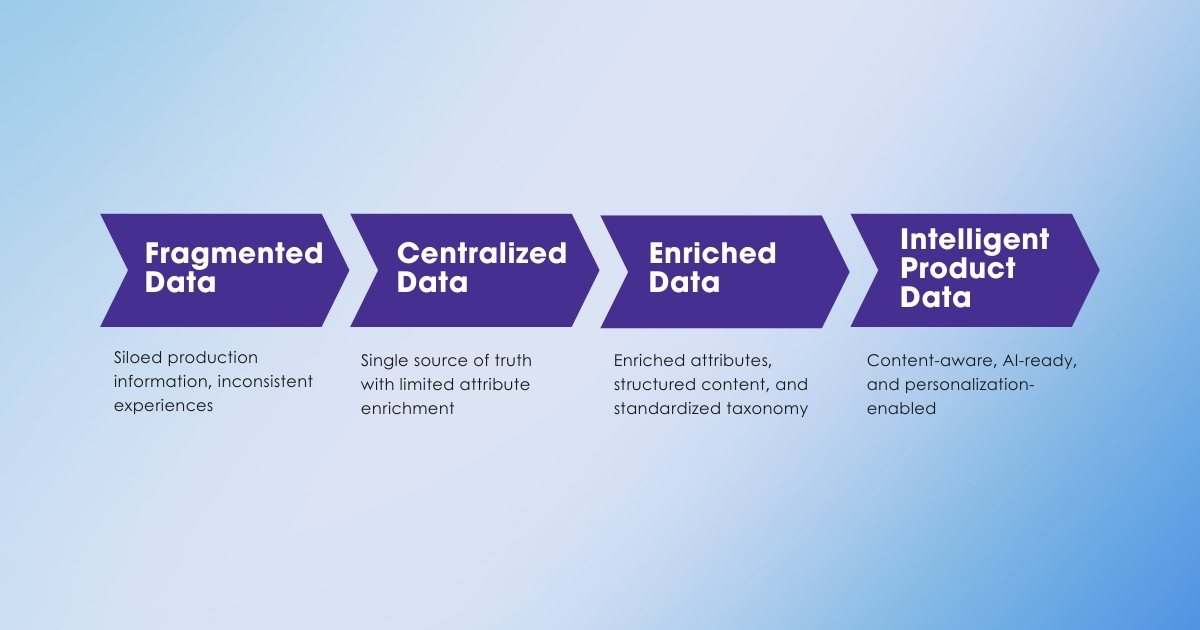
When product information is unified, enriched, and usable throughout the commerce lifecycle, personalization shifts from isolated tactics to a scalable capability fueled by consistent and context-rich product data.
Product information management systems provide the product data required to power personalization and recommendations in complex B2B and D2C environments. With this foundation in place, organizations can activate high-impact personalization methods throughout the customer journey, including:
According to McKinsey, companies that excel at personalization derive about 40% more revenue from personalization activities than their slower-growing peers.
Moreover, McKinsey reports that personalization marketing can reduce customer acquisition costs by as much as 50%, increase revenues by 5 to 15%, and improve marketing ROI by 10 to 30%, reinforcing personalization as a tangible driver of conversion, efficiency, and long-term growth.
.jpg)
In composable commerce architectures, product information management (PIM) operates upstream of experience and activation systems, providing product data to platforms that deliver smooth digital experiences. It complements commerce and marketing tools by ensuring downstream systems draw from a unified and standardized product dataset.
Within the commerce stack, product information management software connects to storefronts, headless APIs, content management systems (CMS), digital experience platforms, search and merchandising engines, personalization and recommendation services, marketplaces, and sales enablement tools. These systems consume structured product attributes, taxonomy, media assets, and localized content to deliver relevant, engaging experiences across channels.
As organizations adopt more specialized tools within the stack, PIM serves as the connective layer to align product data with discovery, personalization, and conversion performance.
Across industries, organizations at varying stages of product data maturity are adopting product information management (PIM) as a foundational capability to support personalization and deliver quantifiable commerce performance. The following examples illustrate how PIM platforms translate this approach into real-world results.
inriver is an enterprise PIM platform designed to manage product information at scale, delivering activation-ready product data across commerce and personalization use cases. Customer outcomes demonstrate the impact of this approach:
Akeneo helps brands and distributors manage large, fast-changing catalogues while improving product completeness, data quality, and time-to-market. Customer results include:
Collectively, these results reinforce that personalization and recommendation initiatives require thoughtful decisions about how product information is structured, managed, and shared across the commerce ecosystem.
Tidal Commerce partners with organizations to define the role of PIM, assess platform fit, and align product data with personalization and recommendation priorities. Our advisory teams support these efforts from strategy through execution. Connect with us to learn how we can accelerate your PIM and digital commerce capabilities.


Blog
All
Blog
All
.webp)
Blog
All
.webp)
Blog
All
Blog
All
Blog
All
Blog
All

Blog
All

Blog
All

Blog
All
Blog
All
.webp)
Blog
All
Blog
All
.webp)
Blog
All
.webp)
Blog
All
.webp)
Blog
All
.webp)
Blog
All
.webp)
Blog
All
Blog
All
.webp)
Blog
All
.webp)
Blog
All
.webp)
Blog
All
Blog
All
.webp)
Blog
All
Blog
All
.webp)
Blog
All
.webp)
Blog
All
.webp)
Blog
All

Blog
All
.webp)
Blog
All
.webp)
Blog
All
Blog
All
.webp)
Blog
All
Blog
All


Get monthly insights, case studies, and bold ideas from the front line of digital commerce & CX.
.svg)
%20dashboard%20showing%20demand%20and%20inventory%20data.%20(1).png)
.webp)
.webp)

.webp)
.webp)
.webp)
.webp)
.webp)
.webp)
.webp)
.webp)
.webp)

.webp)
.webp)
.webp)
.webp)
.webp)
.webp)
.webp)
.webp)
.webp)
.webp)
.webp)
.webp)
.png)
.webp)
.webp)
.webp)