

Shopper expectations are higher than ever before, and with good reason. They have more product choices, retailers, and channels to buy from than ever before. It is a great time to be a consumer but a challenging time for retailers.
To win, merchants must provide a competitive offering (product), get to market faster and provide a differentiated and memorable brand experience through the growing number of touchpoints.
Before we discuss this relatively new approach to building unique online customer experiences, here’s a quick refresher on the limitations of the traditional approach.
We can think of traditional e-commerce platforms as great quality, reliable and popular furniture sets almost everyone owns.

So, if you were a nonconformist wanting a change, the best you could do was to rearrange the furniture set, add new pieces, or replace the entire set. Most online stores are like that; they are built on monolithic e-commerce platforms and are robust and structured, meaning they are easy to manage but could be more flexible. The front end is tied to the back end and reliant on the platform’s ecosystem of approved 3rd party applications. So while you can do a lot of customizations, there are limits.
This legacy approach was appropriate for a time when the velocity of business was unlike today. However, today’s enterprise needs something that aligns better with the agile nature of 21st-century commerce.

What if your furniture was as modular as a Lego set? Your creativity would have no limits. You could build whatever you wanted or make changes easily and quickly. That’s Composable Commerce – flexible architecture.
Composable commerce (a term coined by Gartner in their December 2020″ The Future of Commerce Report”) is a modular digital commerce approach. It extends the modularity principles in which business users can construct commerce experiences using low-code tools. It enables developers to compose any experience by combining a collection of modular and functionally complete components for the e-commerce site, but also for other digital touch points.
Composable Commerce uses cutting-edge technologies and strategies like JAMstack (JavaScript, APIs & Markup) and MACH (microservices, API, cloud, and headless) architectures to adapt to the quickly shifting market dynamics now and in the future.
Gartner posits that organizations that have adopted a composable approach will outpace their competitors by 80% in terms of speedy implementation of new features.
Modularity, openness, and flexibility are the three defining factors of Composable Commerce.
Composable architectures are based on the API-first principle. APIs ensure applications work and pair well with microservices and other APIs regardless of differences in language or code.
With composable architecture, each component of the development stack, like your shopping cart or CRM application, can be easily set up, replaced, scaled, and improved to meet your business needs.
Composable architectures eliminate vendor lock-ins. Applications can be plugged into each other and the rest of the system easily, significantly reducing the time and effort required to integrate multiple services.
All this allows merchants to tailor unique commerce experiences for their clients, get to market faster, and lower costs in the long run.
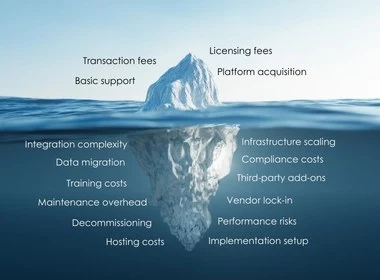
Composable commerce has benefits, but also some costs.
Enables personalized end-to-end customer experiences.
Sales channels have multiplied from physical to online stores, now to social platforms, marketplaces, IoT devices and more. Shoppers are interacting with brands in new contexts and mediums. Constructing a shopper’s journey through the growing number of touchpoints requires much more flexibility than legacy infrastructure.
Enables rapid and easy change
The modular, best-of-breed approach of Composable Commerce allows developers to change any functionality without the risk of breaking other functionalities in the technology stack. .
Reduce customer acquisition costs.
Advertising and paid search have become more expensive and less effective and are not sustainable solutions. This is why savvy enterprise brands have moved to “content” or “experience-led” commerce, which needs a more modular approach to the technology stack.
Avoid vendor lock-in
Traditional platforms can limit client flexibility by locking them in. A composable (modular) design allows you to swap components in and out as your business requirements change.
Better fit for a digitally mature enterprise
Composable commerce is a complex model best suited for larger, digitally mature organizations that can collaborate across functions and have a sophisticated, internal or external team of developers. However, it can also be an expensive approach in the short term.
Managing multiple vendors
Composable Commerce requires negotiation with multiple vendors of the applications you plan to integrate. While this is true of traditional monolithic platforms, the list can be much longer.
Infrastructure and monitoring tool needs can change
Switching to Composable Commerce microservices architecture requires a different infrastructure and monitoring tools, adding to the overall cost of ownership.
Customized control panel
Creating a composable commerce experience requires merchants to build a cohesive user interface on top of other components, which can take more work..
Shopify, the world’s leading eCommerce platform, has invested heavily into creating Hydrogen, a React-based framework built on Remix—or a set of developer tools—for building high-performing, custom Shopify storefronts.
Hydrogen is Shopify’s Headless Commerce stack, which has most of the combined benefits of Composable Commerce and Traditional platforms.
Hydrogen eliminates the constraints of traditional eCommerce platforms. It simplifies the development of totally custom storefronts with pre-built components, hooks, and utilities that make working with the storefront API easy. Hydrogen ships with out-of-the-box defaults like Tailwind CSS and support for TypeScript but can be mixed and matched with your tools of choice and is optimized for performance.
Switching from a traditional platform for a composable approach is effort intensive, but it can be managed in incremental stages. With an incremental approach, you can first decide which capabilities to decouple and when to separate your entire monolith into a system of microservices slowly.
Five generations of diverse consumers are shopping online today, from gen Zs to Boomers; they interact with and experience brands in many more ways than before. They can buy in-store, on your site, on marketplaces, on social channels, and even via smart speakers.
There are many reasons to choose an approach with some degree of composability, but keep in mind that there are also a few challenges. So, before adopting any approach, ensure that you have a holistic view of your business needs and internal and external development capabilities.


Blog
All
Blog
All
.webp)
Blog
All
.webp)
Blog
All
Blog
All
Blog
All
.webp)
Blog
All
Blog
All

Blog
All

Blog
All

Blog
All
Blog
All
.webp)
Blog
All
Blog
All
.webp)
Blog
All
.webp)
Blog
All
.webp)
Blog
All
.webp)
Blog
All
.webp)
Blog
All
Blog
All
.webp)
Blog
All
.webp)
Blog
All
.webp)
Blog
All
Blog
All
.webp)
Blog
All
Blog
All
.webp)
Blog
All
.webp)
Blog
All
.webp)
Blog
All

Blog
All
.webp)
Blog
All
.webp)
Blog
All
Blog
All
.webp)
Blog
All
Blog
All


Get monthly insights, case studies, and bold ideas from the front line of digital commerce & CX.
.svg)
%20dashboard%20showing%20demand%20and%20inventory%20data.%20(1).png)
.webp)
.webp)

.webp)
.webp)
.webp)
.webp)
.webp)
.webp)
.webp)
.webp)
.webp)

.webp)
.webp)
.webp)
.webp)
.webp)
.webp)
.webp)
.webp)
.webp)
.webp)
.webp)
.webp)
.png)
.webp)
.webp)
.webp)